The power nets out, the energy does not
The house meter measures three phases. It nets the power against itself but adds the energy up — which makes its counters useless for the dashboard.
Kapfenberg holds sixteen Shelly devices: eleven permanently on Wi-Fi, three on battery, two over Bluetooth. Three of them are meters, and only together do they produce a picture — one I assembled wrongly twice.
Two traps in merely finding them
Too tight a sweep reports no error. The first run waited two seconds and tried once. It found eight devices. There are eleven.
Among the three that stayed silent was, of all things, the house meter — that is, precisely the device this is about. With six seconds and two attempts all eleven turned up.
Even the thorough sweep does not find everything. Three devices run on battery and sleep between their reports. They answer no request and are fundamentally not findable by address.
An address sweep is never an inventory. It is a list of the devices that happened to be awake and answered fast enough.
The error I put my finger on
The energy dashboard needed grid import and grid export. The obvious move was to reach for the energy counters of the three-phase house meter.
That was wrong. Measured:
power      −34.9 W    = 45.7 − 80.6 + 0           netted
energy    845.6 kWh   = 821.3 + 7.4 + 16.9        sum per phase
Same manufacturer, same device, same family of units — and two different ways of calculating.
The power nets the phases against each other: what is exported on one phase is subtracted from another. The energy only adds up.
The grid operator’s meter nets. And that is exactly why the device’s counters are useless for a bill:
Use them and every exported kilowatt hour also gives you an import on another phase — counted twice, plausible both times.
The dashboard therefore holds purpose-built netting values, not the device’s raw counters.
The two generation figures — and why they do not contradict each other
Two devices report solar generation, and they report different things. For a long time that looked like a fault.
Measured simultaneously:
| Battery, its own solar power | 338 W |
| of which to the output | 148 W |
| of which into charging | 190 W |
| Sum | 338 ✓ |
| Meter behind the inverter | 145 W |
145 against 148 watts — about two percent conversion loss. The meter hangs behind the inverter, not on a strand of its own.
panels → battery → inverter → meter
         ^                     ^
         reports 338 W         measures 145 W
Over the counter readings the same relationship becomes even clearer:
983.88 kWh   total yield, on the DC side at the panels
850.18 kWh   measured behind the inverter
-----------
133.70 kWh   difference, about 13.6 %
That is not a measurement discrepancy. That is the efficiency. Storage losses plus conversion losses, summed over months.
And the wiring explains why the battery reports the higher number at all: four panels deliver over a thousand watts on good days. Whatever the battery does not take bypasses it to the inverter — and that caps at around 800 watts.
What ended up in the dashboard
| Field | Source |
|---|---|
| Grid import | the netted value, not the raw counter |
| Grid export | likewise |
| Solar production | the meter behind the inverter |
| Battery | none |
The last row is deliberate and was the actual insight. The energy dashboard models a battery on the AC side. This one sits on the DC side, before the inverter — its energy is already contained in the solar production.
More on that in Measure fast, set slow: enter both and you count the sun twice.
What I’d suggest
- Configure your network sweep generously before you turn its result into an inventory. Two seconds of difference cost me the house meter here.
- Keep battery devices on a separate list. They are not findable by address, and that is not a fault.
- With three-phase meters, check separately how power and energy are calculated. It can be the same maker, the same device, and still different arithmetic.
- Compare your counter against the grid operator’s before you put it into a cost calculation.
- When two devices measure the same thing and report differently, look for the chain, not for the fault. Two points on one line may well show different numbers — the difference is the efficiency.
So what?
The remarkable thing about this topic is how plausible both errors looked.
Eight devices found does not look like eight out of eleven. It looks like eight devices. And a counter reading 13 percent away from another looks like a measurement error, not like the efficiency of an installation.
In both cases the number was right and the interpretation wrong. And in the second case it was not Claude who noticed but me — because I knew that my meter nets and the devices in the basement do not.
If you want to follow this: use RSS
No newsletter. You give me no address, I keep no list, and nobody has to agree to anything to learn that an article is finished. RSS is the older and, for both sides, the more honest solution.
How it works, and why no newsletter
- 1Get a feed reader. No account needed with an app on your phone or a browser extension; use a hosted service if you prefer.
- 2Add the address above to it.
- 3Done. New articles turn up in your reader by themselves — unread stays unread, and nothing lands between invoices and ads in your inbox.
Why that is better: your reader fetches the file. I get no address and cannot see who reads or whether anyone opened it. Unsubscribing means deleting the entry — no link, no confirmation mail, no me.
Related
My flat tells me the electricity bill in advance
At 23:50 on the last day of the month a notification arrives with consumption, cost components and the expected bill. What the forecast can do and where it ends.
Measure fast, set slow
The solar battery offers nothing locally. The trigger arrives instantly from the house, the action travels halfway round the internet — that decides the design.
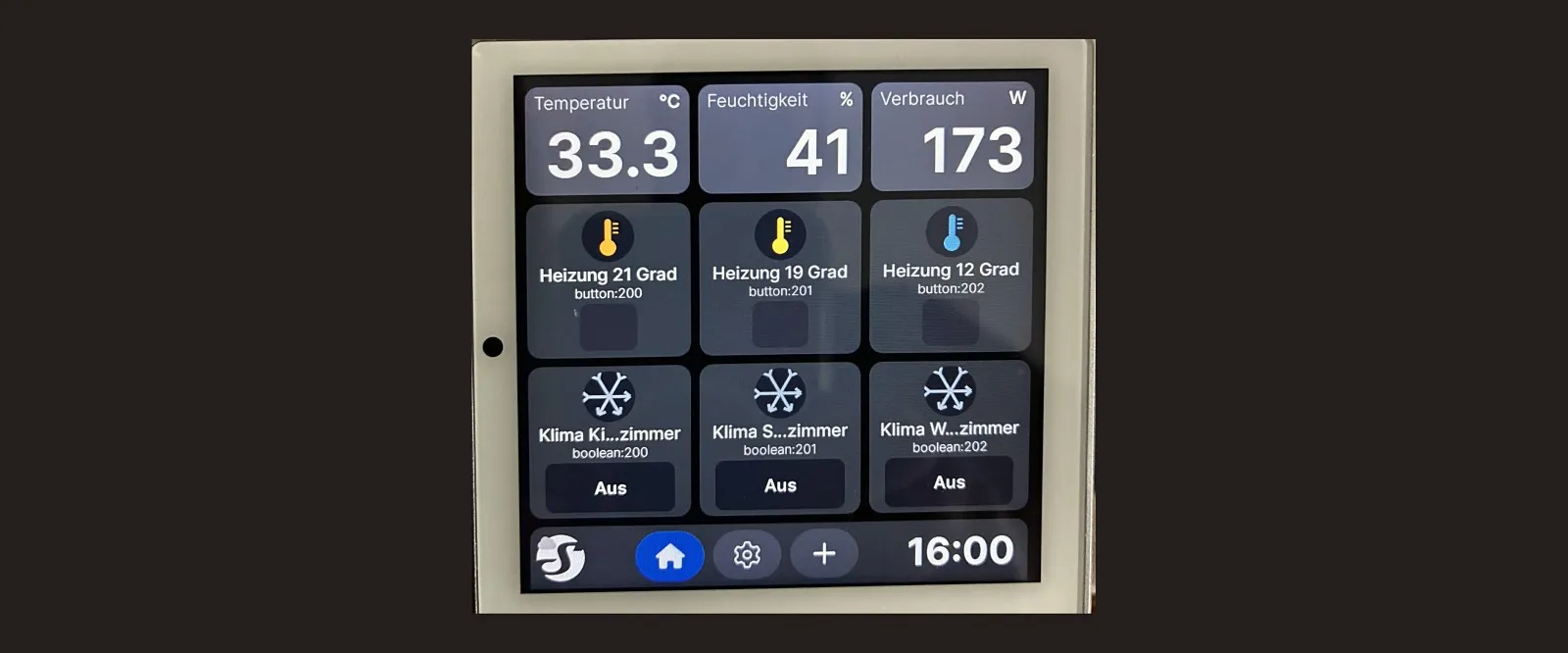
The name lives in three places, and you see only one
Locally no device has the name it has in the account, the firmware stores no umlauts — and the display hid the house power because of a setting in the cloud.